


BECKLEY, W.Va. – Tammy Hairston checks her mailbox every day hoping she’ll receive a letter from a stranger whose kindness saved her life.
“I don’t know who they are, but I’ve written to them a couple of times,” she said. “I haven’t heard back yet, but I hope I do one day. I’d really love to thank them.”
###
Hairston, a certified medical assistant at Beckley ARH Hospital’s Southern West Virginia Clinic, has long struggled with high blood pressure.
While living in Pittsburgh in 2014, however, her symptoms changed.
“I started having fatigue, was always thirsty and my legs would swell, especially at night,” she said. “Lab tests showed my creatinine numbers were high.”
After a biopsy of her kidneys ruled out cancer, her doctor told her the culprit, as she suspected, was her blood pressure.”
Newly prescribed medicine kept her numbers under control for a time, but when she moved home to Beckley in 2015, she said she struggled finding time to reestablish her healthcare.
“I worked at the Southern West Virginia Clinic before I moved, but when I came back I was initially working somewhere else and it took a long time to get back to the doctor,” she said. “I just didn’t keep up with my medicine like I should have.”
In 2019, with her initial symptoms worsening, Hairston finally made an appointment.
“The provider ran a lot of tests and my creatinine levels kept getting worse,” she said. “That’s when she told me I needed to see a nephrologist.”
At that point, Hairston’s kidney function (GFR) was in the 40s, a number that while low, was not critical.
“So, the nephrologist told me to stay on blood pressure medicine, drink water, cut back on processed foods and leave chocolate alone,” she said.
Recognizing the urgency of her situation, Hairston – a Pepsi and potato chip lover – did her best on a low-sodium diet.
“I love my sodium so that was hard,” she said. “Especially with my grandkids and kids here. It’s not easy to cut things out when the people around you are eating them.”
And though Hairston, who had returned to work by then at the Southern West Virginia Clinic, followed doctor’s orders, monthly visits showed her creatinine rising and her GFR falling.
“I felt tired all the time,” she said. “I was worn out. I’d come to work and be on my feet all day and then I didn’t have any energy at all.”
It was 2021 when Hairston’s nephrologist first mentioned the possibility of dialysis. In 2022, with her creatinine levels on the move and a kidney function of 15, the doctor said it was time.
“I cried,” Hairston said of learning the news. “When I got to the car my husband asked what was wrong and I just broke down.”
Over the next year, Hairston, by then on the national transplant waiting list, worked during the day and received dialysis at home at night.
“And I prayed,” she said. “I prayed day and night and night and day. I prayed that God would give me new kidneys.”
As she waited, she said she tried to keep fear from taking over.
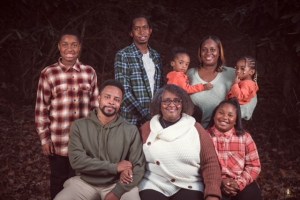 “I would think how long am I going to be here on this Earth with my kids and my grandkids and my friends?’” she recalled. “It was scary, but I tried to keep a smile on my face and stay positive and just pray that the Lord would bless me.”
And He did just that on July 26, 2023.
“I had been at Bible study and then went to my daughter’s house,” she said. “I walked up the steps, sat down in the chair with my grandchildren running around everywhere and then the phone rang with a number I saved as CAMC Transplant.
“It was 8:15 in the evening.”
Hairston was told they had a kidney that needed further testing to ensure it was a match.
“They told me not to eat anything after midnight and they would call me the next day,” she said.
Though she said she didn’t sleep a wink that night, Hairston went on to work the next day in an effort to distract herself.
When the phone rang late in the morning, a coworker drove her home.
“When I got there, I told my husband and we packed my bags and left.”
###
When Hairston was wheeled in for surgery late on the night of July 27, 2023, she said she wasn’t sure what to expect.
“The surgeon told me he had two kidneys,” she recalled. “He said if both worked for me, I’d have them both. If only one worked, I’d have one. If neither worked, we’d go back to the same waiting.”
Her surgery lasted roughly five hours and when she woke up, she asked, “how many?”
“When they told me it was two, I started crying and thanking God,” she said. “I felt like I was a miracle.”
It was shortly thereafter that she named her two new blessings.
“They’re Faith and Hope,” she said. “Hope was the prayer that I prayed to receive new kidneys, and Faith was the faith believing that God would provide.”
Recovery was a painful process, but Hairston returned to the new version of her normal life – back at work and in church – within a few months.
Her blood pressure is under control now, and both her creatinine levels and GFR are in perfect range.
“The only thing is I’m a diabetic since the transplant but it’s under control,” she said. “And I’m OK with that. I can handle that.”
It’s a fair trade, she said, considering she now has the chance to grow old with her husband Barry, spend time with her three children and watch her six grandchildren grow.
Those are the reasons she writes letters to the family of her organ donor.
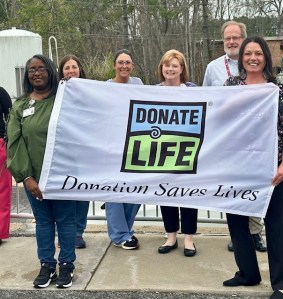 “I know I was given this second chance because someone’s life ended,” she said. “I’m here because of that and because someone chose to give life to someone else as their final act. It’s like I have an angel.”
And though she hasn’t had a reply to her letters, she said she’ll keep writing.
“I feel like my donor’s family is part of my family now,” she said. “I want to be able to tell them that and to express gratitude.
“I pray one day the Lord will allow me to do that.”
###
For information on becoming an organ donor, visit www.donatelife.net.