


LEXINGTON, Ky. – As the country celebrated Independence Day on July 4, 1953, residents of central Appalachia celebrated hope for the future as ground was broken on the first of the 10 highly anticipated – and long overdue – Miners Memorial Hospitals.
Just three short years later – 70 years ago today – thousands gathered in Beckley, W.Va., for the dedication of what is known today as Appalachian Regional Healthcare.
This is how the event was described in the next day’s edition of The New York Times:
BECKLEY, W.Va., June 2, 1953 – Today was one of the biggest days in the history of this small Appalachian coal mining town. There were barbecues and basket dinners, visiting with neighbors, lost children, a chance to see John L. Lewis in person and music by the famous Monongah Band composed of sixty miners.
Early this morning a special train, the first passenger train in years to travel the track that yearly carries thousands of tons of coal, arrived carrying United Mine Workers of America officials and many of the nation’s medical and health leaders. On hand to greet them were thousands of coal miners and their families from mining communities throughout West Virginia, Virginia and Kentucky, who took their seats hours before the festivities started in spite of the fact it was cold and drizzling rain – “BlackBerry winter,” they call it down here.
The occasion was important not only for Beckley but for the 400,000 miners and their families who live in the coal-rich regions of Virginia West Virginia and Kentucky. For today 10 new hospitals, built and equipped at a cost of $25,000,000, were dedicated.
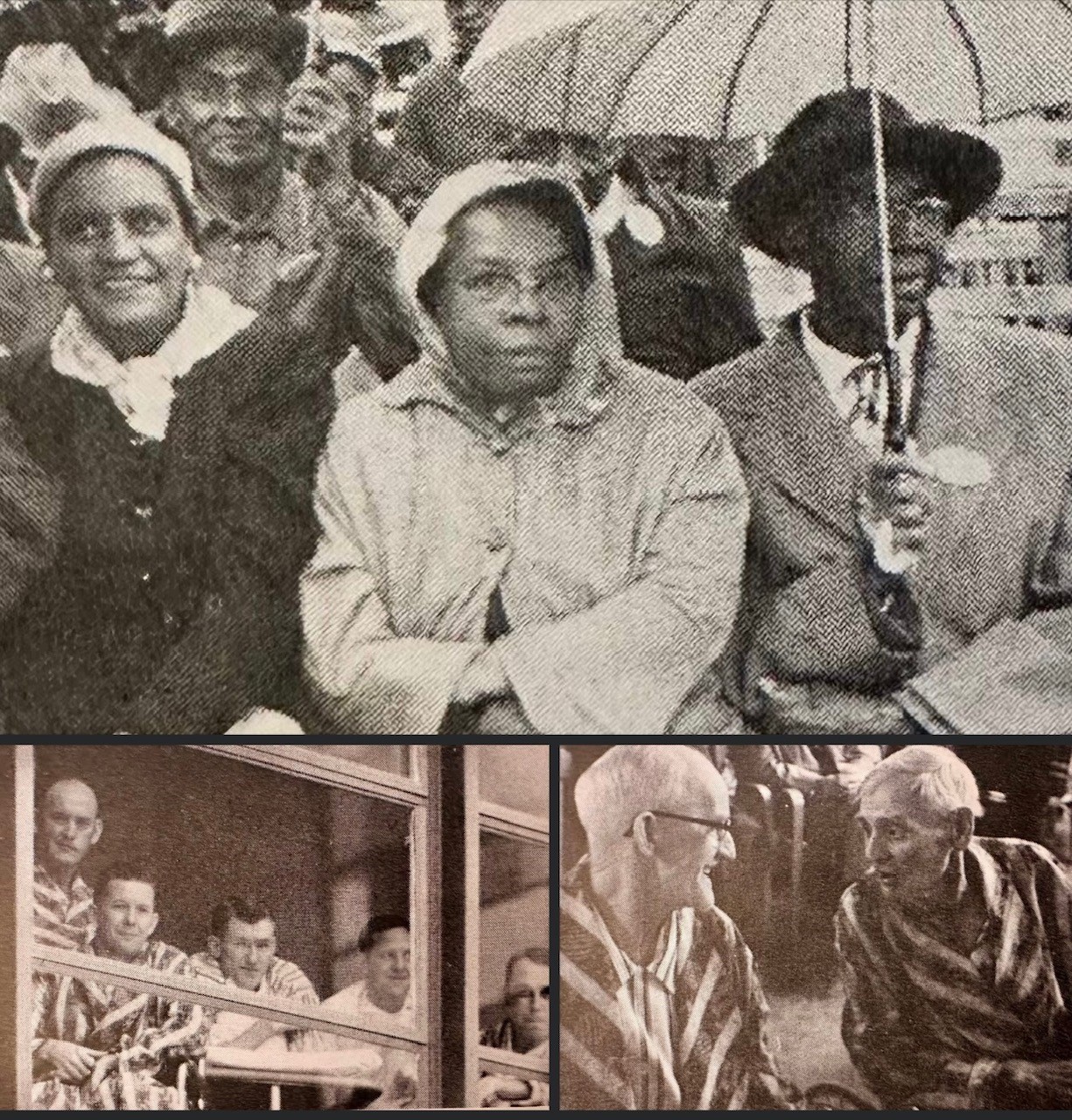
Photos from the event show the crowd – dressed in their finest – gathered under umbrellas, while patients – coal miners receiving much-needed, oftentimes lifesaving, specialized care, looked out from hospital windows as former UMWA Chairman John L. Lewis spoke.
“These hospitals are in memory of those who suffered and died before us that we might today be privileged and more comfortable and be better treated and live longer and fulfil more of the destiny of a human being.”
As hospital doors opened, the U.S. Senate, following an investigation of the UMWA’s welfare and pension plan, released its opinion.
“The medical program is outstanding. The decision of the fund to build a chain of hospitals to provide service to its beneficiaries appears to be well taken, and the hospital should do much to raise the level of care available to miners in these areas. The building of these hospitals is an indication of the imaginativeness, boldness and vigor with which the medical program has been conceived and operated.”
That imaginativeness, boldness and vigor have only increased over the past seven decades, as Miners Memorial Hospitals gave way to Appalachian Regional Hospitals and now Appalachian Regional Healthcare, a system that has grown from 10 hospitals to 14, with nearly 7,000 employees caring for more than 500,000 patients each year.
***
“These hospitals are not monuments of cold stone or commemorative bits of architecture. Rather, they are a living tribute; they will issue forth life in the newborn; offer solace and treatment for the sick and injured; give hope to the critically ill; and embrace the span of mortal man from the first rasping cry to the last deep sigh.”
It has been 70 years since those words were published in the Bristol Herald Courier, but every syllable rings true today.
Names have changed, faces have come and gone, but ARH’s commitment to the people of central Appalachia has never wavered, nor has it been confined to the four walls of its hospitals, clinics and pharmacies. Members of the ARH team are out in their communities, each and every day, providing care, participating, listening, educating and supporting.
ARH President and CEO Hollie Harris said those employees – both past and present – are the reasons the system remains strong after 70 years.
“As ARH celebrates this milestone throughout 2026, it is important to recognize the hard work of every employee who has dedicated their lives to caring for the residents of central Appalachia,” she said. “It is because of that commitment – the dedication to trust, innovation, collaboration, compassion and service – that ARH celebrates 70 years.
“And it’s that foundation that will allow it to continue for another 70 years and beyond.”
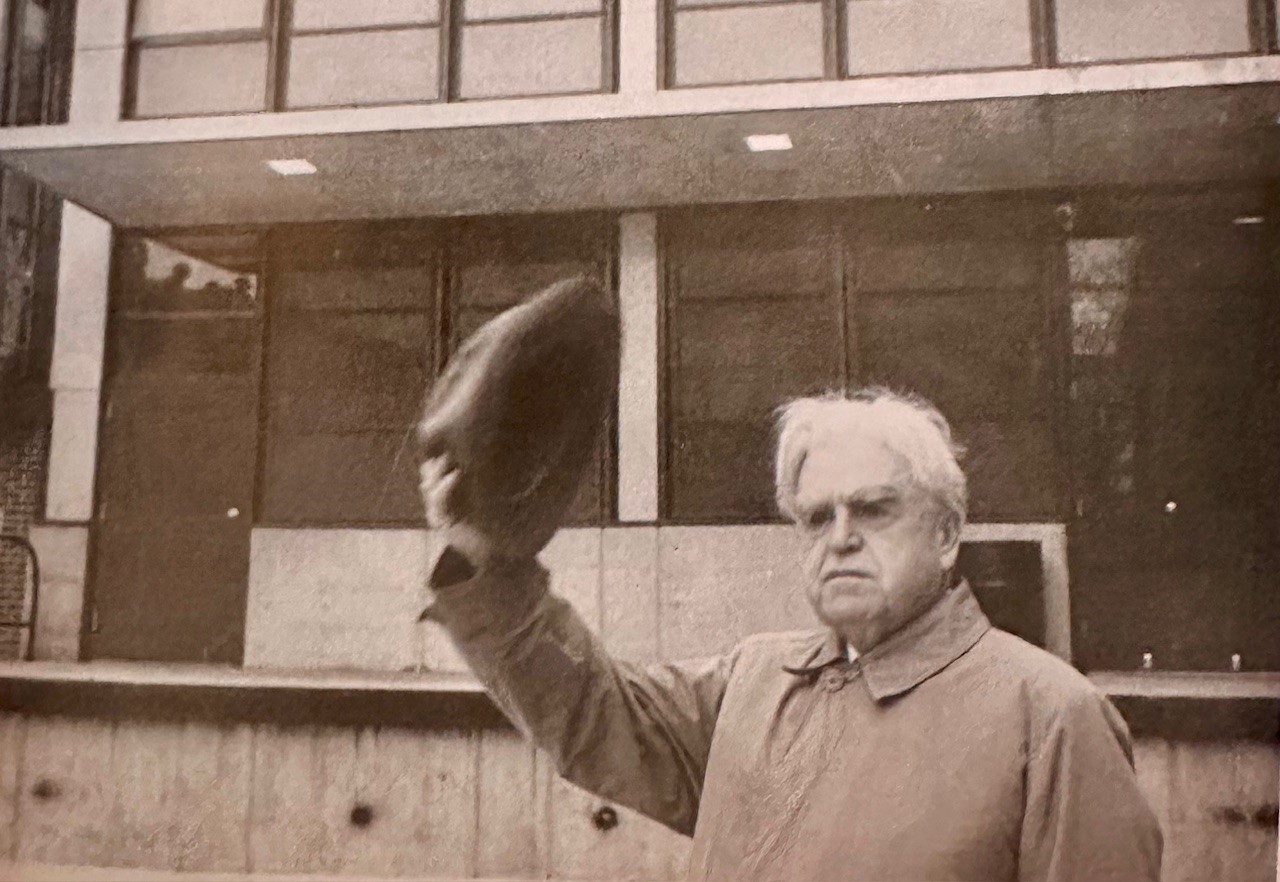
Former UMWA Chairman John L. Lewis waves to the crowd at the end of the dedication.
# # #